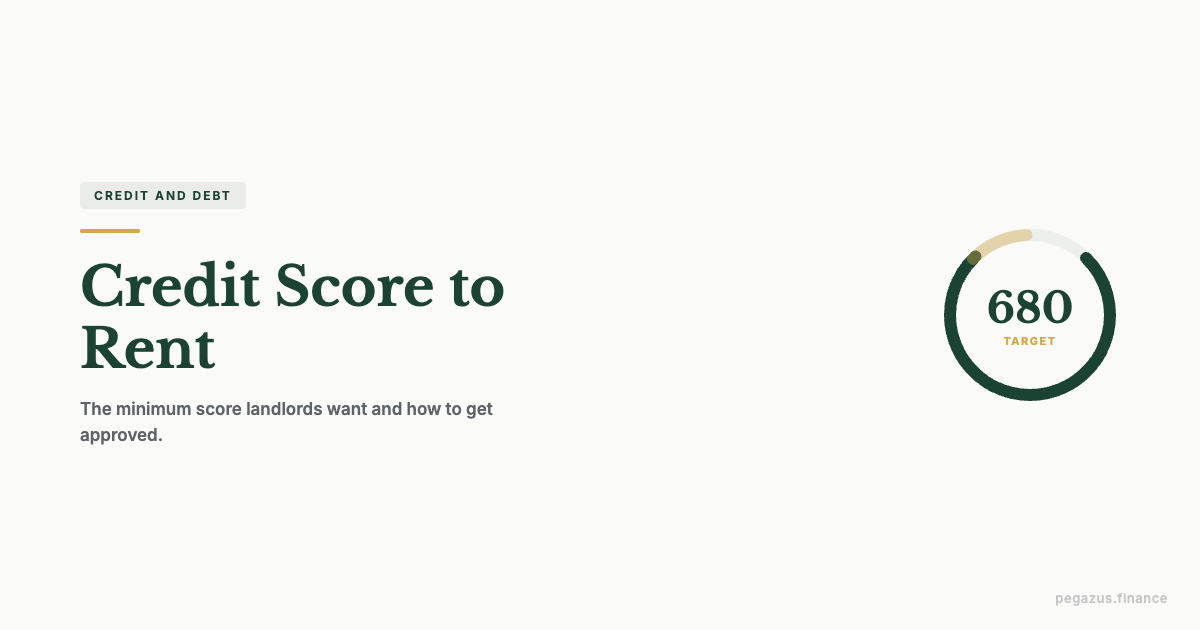
Most landlords require a credit score of 620 to 680 to approve a rental application, though luxury apartments often set the bar at 700 or higher. If your score falls below that range, you can still rent by offering a larger security deposit, finding a co-signer, or providing proof of income and rental history directly. No credit history is not the same as bad credit, and many landlords will work with you if you can demonstrate ability to pay.
What credit score range do most landlords accept?
The minimum credit score for a rental depends on the property type, location, and landlord. Individual landlords and small property managers tend to be more flexible than large management companies that use automated screening. In competitive rental markets like New York, San Francisco, and Boston, expect higher minimums.
When I last checked, most property management companies use a 620 to 680 minimum for standard apartments. Luxury buildings and new construction often require 700 or higher. TransUnion SmartMove and Experian Connect are the two most common tenant screening tools landlords use. These reports show your credit score, payment history, public records, and sometimes a rental-specific risk score. A score below 580 makes conventional rentals difficult but not impossible. Government-subsidized housing and private landlords who do not run credit checks are options in that range.
| Credit Score Range | FICO Category | Rental Approval Likelihood | Typical Conditions |
|---|---|---|---|
| 750+ | Excellent | Very high | Standard deposit, best units available |
| 700-749 | Good | High | Standard deposit, most units available |
| 650-699 | Fair | Moderate | May need extra deposit or documentation |
| 600-649 | Below average | Lower | Larger deposit, co-signer often required |
| Below 600 | Poor | Difficult | Limited options, private landlords, co-signer essential |
What else do landlords check besides your credit score?
Your credit score is one data point in a broader screening. Landlords typically verify income (most require gross monthly income of at least three times the rent), employment status, eviction history, and criminal background. A strong income with a mediocre credit score is more convincing than a high score with unstable employment.
Eviction records carry more weight than a low credit score for most landlords. An eviction in the past seven years is a near-automatic rejection at large property management companies. The Consumer Financial Protection Bureau’s renter rights page explains what information landlords can legally use in screening decisions. Some jurisdictions have banned credit score screening entirely or limited how landlords can use it. Cities including Portland, Oregon, and parts of New York State have restrictions on screening criteria. Check your local tenant protection laws before assuming a low score disqualifies you.
What if you have no credit history at all?
No credit history means you are “credit invisible,” which is different from having bad credit. Roughly 26 million Americans have no credit file at all, according to the CFPB’s research on credit invisibility. Many landlords will accept alternative documentation when no traditional credit report exists.
Provide bank statements showing consistent deposits and a healthy balance. Bring proof of on-time payments for utilities, phone bills, or insurance. A letter from a previous landlord confirming your rental history and payment reliability carries significant weight. If you are renting for the first time, an employment verification letter showing your salary and tenure helps. Some landlords will accept a larger security deposit (often an extra month’s rent) in place of a credit check. Starting to build credit now ensures this problem does not follow you to your next lease renewal or apartment search.
How can you rent an apartment with bad credit?
A co-signer with good credit (typically 700+) and sufficient income is the most reliable workaround. The co-signer becomes legally responsible for rent if you default, so this is a significant ask. Parents, close family members, or partners with established credit are the most common co-signers.
Offering a larger security deposit demonstrates financial commitment. Some landlords accept two or three months’ rent upfront in exchange for relaxing the credit requirement. Prepaying several months of rent in advance is another option if you have savings but poor credit. Private landlords who manage their own properties are generally more flexible than corporate management companies. Search for “for rent by owner” listings on Craigslist, Facebook Marketplace, or local community boards. Rent reporting services like Experian Boost and RentTrack add your on-time rent payments to your credit file, which can raise your score for future applications. The gap between a 620 and a 680 score is often closable in six to twelve months of consistent on-time payments.
Does applying for apartments hurt your credit score?
Hard credit inquiries from rental applications can lower your score by two to five points each. If you apply to multiple apartments within a 14-day window, most credit scoring models count them as a single inquiry for scoring purposes. Batch your applications within that window.
Not all landlords pull a hard inquiry. Some use soft-pull screening tools that do not affect your score. Ask before authorizing a credit check whether the landlord uses a hard or soft pull. According to FICO’s inquiry guidance, hard inquiries remain on your credit report for two years but only affect your score for the first twelve months. If you are actively apartment hunting with a borderline credit score, avoid opening new credit cards or taking other credit actions during the same period. Each additional hard inquiry compounds the effect. Pull your own credit report for free at AnnualCreditReport.com before you start applying so you know exactly what landlords will see.
Which cities have the strictest and most lenient credit requirements?
High-cost markets with low vacancy rates impose the strictest standards. San Francisco, Manhattan, and Washington DC landlords routinely require 700+ scores and income of four times the rent. Markets with higher vacancy rates and lower costs of living tend to be more lenient.
Cities in the Midwest and Southeast generally have more flexible screening. Landlords in Indianapolis, Memphis, and San Antonio are more likely to accept scores in the 580 to 620 range with additional documentation. College towns have many landlords experienced with thin-file renters who have no credit history. Rural areas and smaller cities often have private landlords who rely on personal references rather than formal credit screening. If you have bad credit, targeting markets with higher vacancy rates gives you more negotiating leverage. A landlord with an empty unit loses rent every day it sits vacant, which makes them more willing to accept a qualified tenant with an imperfect credit score.
Frequently Asked Questions
Can a landlord legally deny you based solely on your credit score?
In most states, yes. However, several cities and states have enacted screening restrictions. Portland, Oregon bans most credit-based denial. Check your local tenant protection laws through your state attorney general’s office.
How long before applying should you check your credit?
Pull your free credit report at least 30 days before apartment hunting. This gives you time to dispute errors, which the bureaus must investigate within 30 days under the Fair Credit Reporting Act.
Do all three credit bureaus matter for rental applications?
Most landlord screening tools pull from one bureau, typically TransUnion or Experian. Your scores may differ across bureaus by 20 to 40 points. Check all three reports at AnnualCreditReport.com to see what each contains.
Will paying off collections before applying help my score?
Under newer FICO scoring models (FICO 9 and FICO 10), paid collections are excluded from the score calculation. Paying them off before applying improves your report even if some landlords use older models that still count paid collections.
Sources
- TransUnion, “Tenant Screening Solutions,” transunion.com. Date checked: Sep 2026.
- Consumer Financial Protection Bureau, “Renter Rights,” consumerfinance.gov. Date checked: Sep 2026.
- CFPB, “Who Are Credit Invisible?” consumerfinance.gov. Date checked: Sep 2026.
- FICO, “Credit Inquiry Impact,” myfico.com. Date checked: Sep 2026.
- Experian, “Experian Connect for Landlords,” experian.com. Date checked: Sep 2026.
This article is for informational purposes only and does not constitute financial or legal advice. Read our full disclaimer.