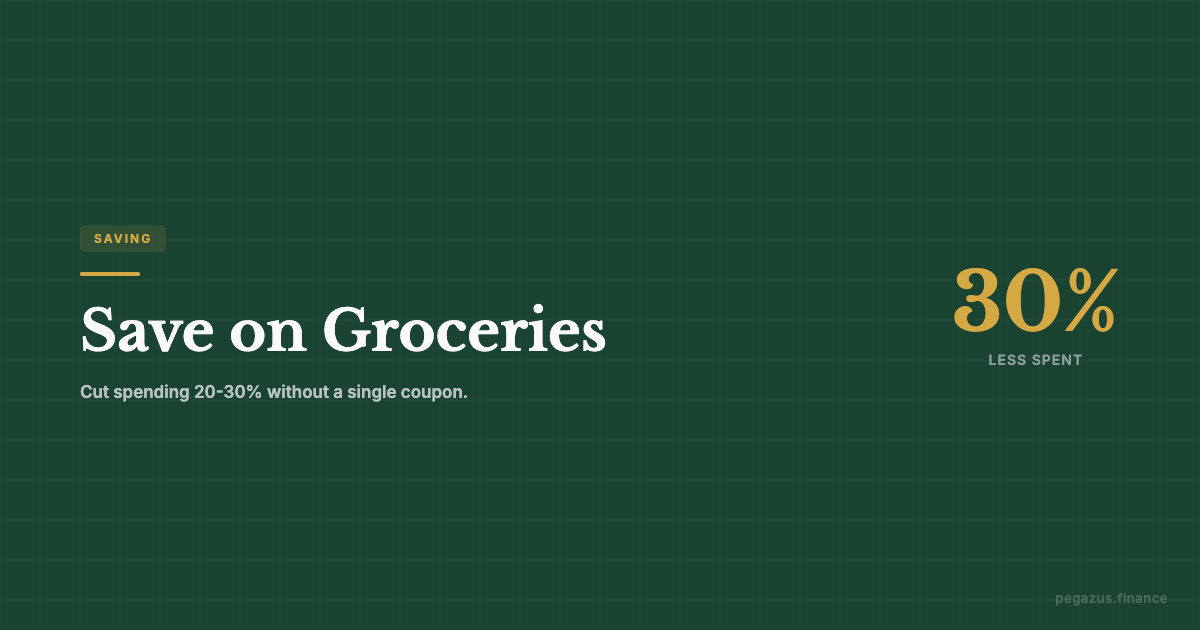
The most effective way to cut grocery spending without clipping coupons is meal planning combined with store-brand substitution. Planning meals for the week before shopping reduces impulse buys and food waste, saving most households 20 to 30% on their monthly bill. Switching from name brands to store brands on staples saves another 25 to 30% per item with no meaningful quality difference.
How much does the average American actually spend on groceries?
The Bureau of Labor Statistics Consumer Expenditure Survey reports that the average American household spends roughly $475 per month on food at home. The USDA Thrifty Food Plan, which sets the baseline for SNAP benefits, estimates a family of four can eat adequately for about $325 per month. That gap between $325 and $475 is where most of the savings hide. It is not about deprivation. It is about buying habits.
The biggest driver of overspending is not the price of individual items. It is buying food you do not eat. The USDA estimates that 30 to 40% of the food supply in the United States goes to waste. At the household level, that translates to roughly $1,500 per year thrown away. Fixing this one problem does more than any coupon strategy.
Does meal planning really make that big of a difference?
Meal planning is the single highest-impact grocery strategy because it attacks both overspending and waste simultaneously. When you walk into a store knowing exactly what you need, you skip the center aisles full of impulse items. When every ingredient you buy has a destination in a specific meal, less food rots in the back of the fridge.
The process is simple. Pick five to seven dinners for the week. Check what you already have. Write a list of what you need. Shop from the list only. The whole thing takes 15 to 20 minutes on a Sunday. Batch cooking two or three meals in advance cuts weeknight prep time and reduces the temptation to order takeout. A household that meal plans and batch cooks can realistically cut their grocery bill by 20 to 30% within the first month.
How much cheaper are store brands compared to name brands?
Store brands cost 25 to 30% less than their name-brand equivalents on average. In many cases, the products come from the same manufacturers and differ only in packaging. Costco’s Kirkland Signature, Walmart’s Great Value, Trader Joe’s private label, and Aldi’s house brands consistently rank well in blind taste tests.
Here is a side-by-side comparison on 10 common staples:
| Item | Name Brand (approx.) | Store Brand (approx.) | Savings |
|---|---|---|---|
| Cereal (18 oz) | $5.49 | $3.29 | 40% |
| Pasta sauce (24 oz) | $4.29 | $2.49 | 42% |
| Canned beans (15 oz) | $1.49 | $0.89 | 40% |
| Butter (1 lb) | $5.99 | $4.49 | 25% |
| Greek yogurt (32 oz) | $6.99 | $4.99 | 29% |
| Shredded cheese (8 oz) | $4.49 | $3.19 | 29% |
| Frozen vegetables (16 oz) | $3.29 | $1.99 | 39% |
| Rice (2 lb) | $3.99 | $2.79 | 30% |
| Paper towels (6 roll) | $8.99 | $5.99 | 33% |
| Dish soap (22 oz) | $4.29 | $2.99 | 30% |
Switching just these 10 items to store brands saves roughly $15 per shopping trip. Over a year, that adds up to $780. The opinion I will defend: store brands are the single easiest substitution in a grocery budget because they require zero effort and zero sacrifice.
What are the best shopping strategies beyond brand switching?
Buy in season. Strawberries in January cost twice what they cost in June. The USDA Seasonal Produce Guide lists what is cheapest each month. Frozen fruits and vegetables are picked at peak ripeness and flash-frozen, making them nutritionally equivalent to fresh at a fraction of the cost. A bag of frozen broccoli costs $1.50 to $2.00 and lasts months. Fresh broccoli crowns cost $2.50 to $3.00 and last about a week.
Compare unit prices, not sticker prices. The unit price is printed on the shelf tag in small type, showing the cost per ounce, per count, or per pound. A larger container is not always cheaper per unit. Check the math. Stock up on shelf-stable staples when they go on sale. Rice, pasta, canned goods, and frozen proteins keep for months. Buying these at 20 to 30% off during periodic sales is more effective than chasing weekly coupon deals.
How do you reduce food waste at home?
Store produce properly. Berries last longer in a single layer on a paper towel. Herbs stay fresh in a glass of water in the fridge. Bread freezes well. Leftovers should go into clear containers at the front of the fridge where you can see them. The “eat first” shelf technique puts items closest to expiration at eye level. Freeze leftovers you will not eat within two days. A chest freezer pays for itself within six months if you use it to store batch-cooked meals and sale items.
Track what you throw away for two weeks. Write it down on a notepad stuck to the fridge. Most people discover they waste the same categories repeatedly. Once you see the pattern, you stop buying the items that rot before you eat them. This awareness alone cuts grocery spending measurably within a single billing cycle.
Frequently Asked Questions
Is buying in bulk always cheaper?
Not always. Compare unit prices. Bulk is cheaper for shelf-stable items you actually use. Perishables bought in bulk often go to waste, canceling the savings.
Are grocery delivery services more expensive?
Delivery fees and markups add 10 to 15% to your bill. However, some people spend less overall because they avoid impulse buys when shopping from a screen.
What is the cheapest protein source?
Dried beans, lentils, and eggs are the cheapest protein sources per gram. Chicken thighs and canned tuna offer the best value among animal proteins.
Does shopping at Aldi or Lidl really save money?
Yes. Aldi and Lidl focus on private-label products with minimal overhead. Most shoppers report saving 30 to 40% compared to traditional supermarkets.
Sources
- BLS — Consumer Expenditure Survey
- USDA — Food Plans: Cost of Food Reports
- USDA — Food Waste FAQs
- USDA SNAP-Ed — Seasonal Produce Guide
Date checked: September 2026
This content is for informational purposes only and does not constitute financial advice. Read our full disclaimer and learn about how we research.